Posts

Forest Service FOIA Response Inadequate; Appeal Pending

Image
As already reported on this blog, the Forest Service responded to a FOIA request for records related to the Upper Echo Lake Hazardous Fuels Reduction Project by withholding large amounts of material the agency was obliged to disclose. One of the more egregious examples is an e-mail from Forest Service staff to Regional Water Quality Control Board staff displayed below. The agency invokes the attorney-client privilege for a communication on which there are no attorneys.  And it claims deliberative process for a communication not only outside the agency but to a state government employee acting in a regulatory capacity.  This is plainly contrary to the law.

The savaged high-mountain wilderness: a narrative

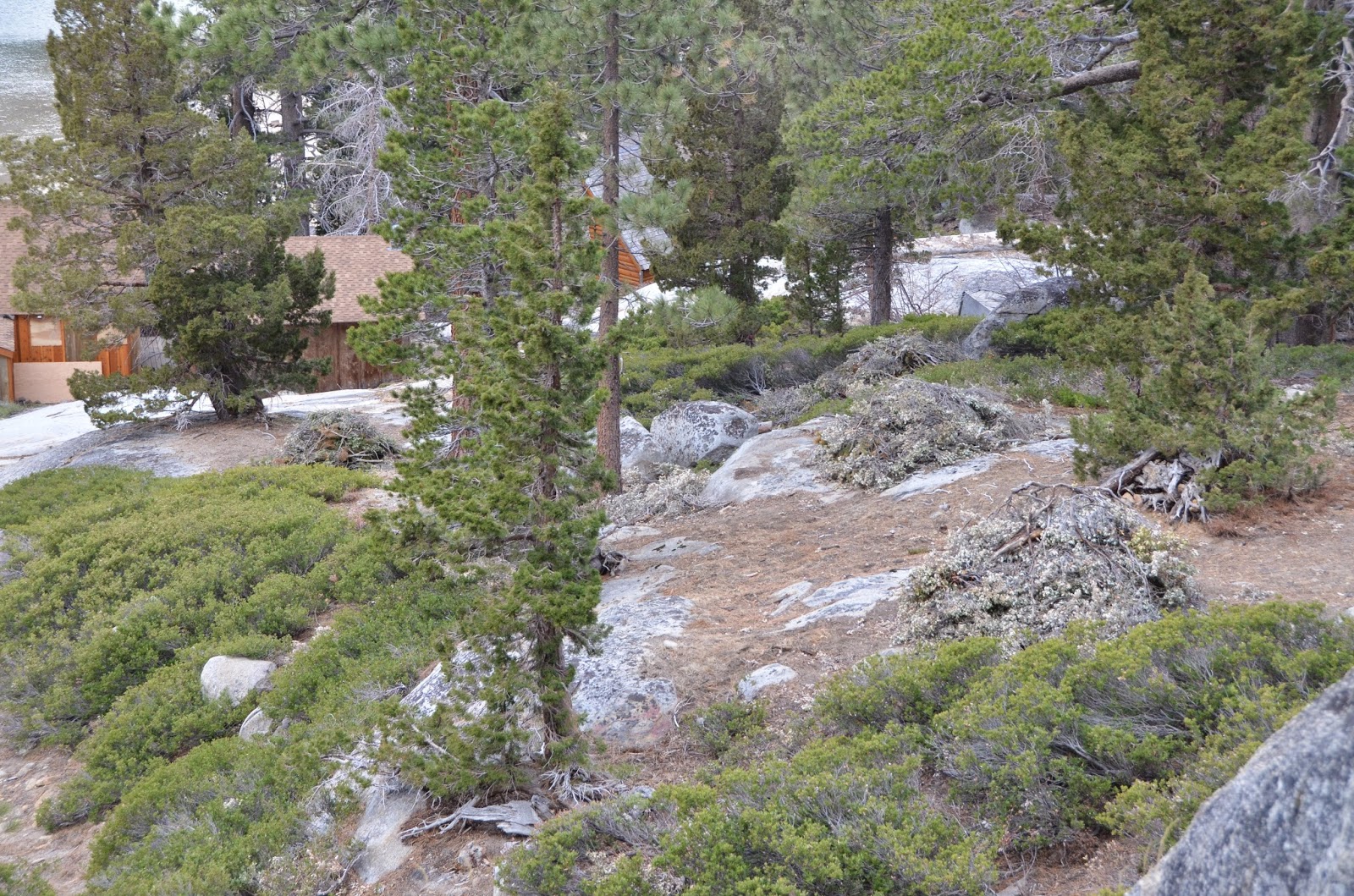
To visitors hiking toward Desolation Valley Wilderness along the Pacific Crest Trail, the first signs of environmental damage caused by initial Forest Service activities under the Upper Echo Lake Hazardous Fuels Reduction Project are not dropped trees and scattered limbs. It is the inexplicable gaps in the shrubby understory of the small forest patches that punctuate the slopes above Lower Echo Lake. There in autumn of 2013 the Forest Service hacked and pulled up knee-high huckleberry oak and montane manzanita that form a near-continuous cover on otherwise exposed soils amidst glacially polished granite sheets and boulders. The intent apparently was to reduce continuous ground fuels and potential ladder fuels. The outcome was certainly very different. The scattered vegetation at the west end of Lower Echo Lake offers no possibility of wildfire; with less than a third of the landscape with any vegetation at all. No risk of fire bounding beyond a small area of ignition exists. B...

Forest Service FOIA Response Reveals ... Nothing

Image
On April 7, 2015, the Forest Service responded to a FOIA request for records related to the Upper Echo Lake Hazardous Fuels Reduction Project.  The request was submitted to that agency more than 6 months earlier, on September 18, 2014.  An earlier post regarding the outstanding request is here .  The agency provided a few hundred pages of documents, and a very substantial number are similar to this: And this: This sort of response is contrary to the concept of open government that is the foundation for the Freedom of Information Act.

The Upper Echo Lake Hazardous Fuels Reduction Project: A Photo Essay

Image
Dry chaparral piles in November 2013, just a month after cutting. They  remain in place, others are scattered 18 months later. Large shrub pile pulled from the base of two hundred-year-old Jeffery  pine, stacked to create a potential fuel ladder. Material remains in place  18 months later. Another view of the same damaged chaparral stand from May 2014 showing  a pile of flammable material where it cannot be safely burned. Huckleberry oak and lodgepole pine slash piled in wetland seep (May 2014). Chaparral slash piled on meadow in foreground. The material was dragged  from the middle ground in the photo, leaving soils fully exposed. In spring 2015, a pile of chaparral creating a localized fire hazard  where none previously existed.

Legacy of Forest Service Project is Scarred Environment; Ongoing Impacts to Wetlands

Image
The legacy of just two months of cutting and placement of slash piles around Upper Echo Lake by the Forest Service in 2013 is a scarred local ecosystem. This photograph taken in spring 2015, a historic dry period, provides just one example of the fact that the Forest Service placed cut material in wetlands through the affected project area.  Slash piles left behind by the agency are finding their way into stream courses and remnants of the piles can be expected to eventually make their way into Upper and Lower Echo Lake, degrading water quality. This photograph documents loose slash in a water course also in spring 2015.

Federal Court Denies Motion to Dismiss Lawsuit Challenging Upper Echo Lake Hazardous Fuels Reduction Project

Image
On March 31, the United States District Court for the Eastern District of California issued an order denying the motion of the Forest Service to dismiss a lawsuit filed by Dr. Dennis Murphy challenging the legality of the Upper Echo Lake Hazardous Fuels Reduction Project.   The court rejected the Forest Service’s motion to dismiss in all respects.   While the agency argued that Dr. Murphy was required to voice his concerns regarding the Project through an  ad hoc  administrative appeals process and his failure to do so left him with no recourse to the judiciary, the court did not agree.   Likewise, the court rejected the agency’s argument that even if the Project implemented has environmental impacts that were not disclosed or analyzed up front, Dr. Murphy cannot challenge the Project once it is underway.

New Forest Supervisor at Tahoe: Business as Usual or a More Efficient and Accountable Agency?

A number of news outlets have covered the recent announcement that Jeff Marsolais was named as the new forest supervisor for the Lake Tahoe Basin Management Unit .  For example, the Tahoe Daily Tribune printed a Q&A with the new supervisor.  What remains to be seen is whether Mr. Marsolais will perpetuate the status quo initiated by his predecessor or work to lead a more efficient and accountable agency.  Let's hope for the latter.  Both the public and agency staff would benefit from leadership in the Management Unit that makes fiscally responsible decisions informed by quality science in a transparent manner.