Posts

El Dorado Irrigation District Monitoring Reports Confirm Yellow-Legged Frog Presence Adjacent to Upper Echo Lake

Image
Over the past 12 years, the El Dorado Irrigation District has conducted surveys at Upper Echo Lake and other locations in the region.  In each year the District conducted surveys -- 2002 , 2004 , and 2011 -- the District located Sierra Nevada yellow-legged frogs at Camp Harvey West, a shuttered boy scout camp that used to operate on the west side of Upper Echo Lake.  A map of the location is set out below. The second phase of the Upper Echo Lake Hazardous Fuels Reduction Project, which is slated to commence after Labor Day 2014, contemplates tree cutting, brush removal, and slash pile placement activities on the south and west sides of Upper Echo Lake, including in areas that constitute habitat for the yellow-legged frog.

Project Impacts on Environment Become More Apparent in Spring 2014

Image
Even in this extraordinarily dry year, the water quality impacts of the Forest Service's Upper Echo Lake Hazardous Fuels Reduction Project are apparent.  This photo shows a slash pile in a seasonal pond. This photo shows a slash pile on the left hand side of the image below sheet runoff over granite down to Upper Echo Lake. This next photo shows a slash pile adjacent to a readily recognized stream bed.  The Forest Service intends to burn these slash piles, which already number in the hundreds, in place. This next photo shows a slash pile placed on top of a stream bed.  If the pile is burned, the residual material will certainly be transported into Upper Echo Lake.

Endangered Sierra Nevada yellow-legged frog sited adjacent to Upper Echo Lake

Image
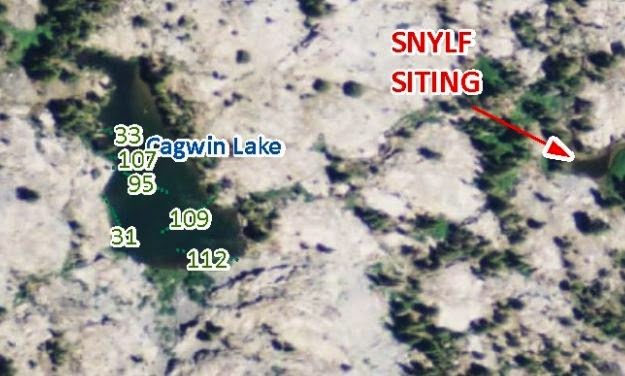
In a report issued in 2011, the U.S. Forest Service indicated that two Sierra Nevada yellow-legged frogs were sited approximately 1 kilometer from Upper Echo Lake.  The species was listed as endangered by the Fish and Wildlife Service on April 29, 2014, as we explain here .  A portion of the map in the 2011 report that highlights the frog siting is set out below.   According to the fina listing rule, the frog is known to travel substantial distances in and adjacent to stream courses and, to a lesser extent, over upland areas at certain points in its life cycle.  A USGS map displaying Cagin Lake and the location of the frog sitings in relationship to Upper Echo Lake is set out below.     These sitings together with the Fish and Wildlife Service's proposed rule designating the entire area as critical habitat for the frog provide strong evidence that the Upper Echo Lake Hazardous Fuels Reduction Project is harming the species.

Court Signs Order Clarifying that No Cutting will Occur until Labor Day 2014 or Later

On May 15, 2014, the United States District Court for the Eastern District of California signed a stipulation and order that extended the time for plaintiff Dr. Dennis Murphy and defendant the United States Forest Service to seek to settle a pending lawsuit over the Upper Echo Lake Hazardous Fuels Reduction Project.  The stipulation and order clarify that the Forest Service will not engage in additional tree cutting at Upper Echo Lake until Labor Day 2014, at the earliest, in order to allow the parties to continue settlement discussions and in light of an earlier request from the Echo Lakes Association to limit activity during the summer months.

Murphy submits new notice of intent to sue Forest Service for violations of the Endangered Species Act at Upper Echo Lake

Dr. Dennis Murphy has submitted to the U.S. Forest Service and U.S. Fish and Wildlife Service a 60-day notice of intent to sue the Forest Service for proceeding with the Upper Echo Lake Hazardous Fuels Reduction Project in spite of the recent Fish and Wildlife Service determination to list the Sierra Nevada yellow-legged frog.  The final rule provides that the Project site falls within the distribution of the species.  The proposed rule designating critical habitat for the species confirms this fact.  Although Forest Service personnel claimed, during the approval process for the Project, that no amphibians were present at the Project site, the facts belie this claim.  Further, a 2011 report by the Forest Service indicates that individual yellow-legged frogs were detected within less than a mile of Upper Echo Lake.

Fish and Wildlife Service lists Sierra Nevada yellow-legged frog as endangered

As described in this blog post , the U.S. Fish and Wildlife Service has listed the Sierra Nevada yellow-legged frog as endangered.  The historical range of the species includes the area surrounding Lower and Upper Echo Lakes.  The Fish and Wildlife Service has also issued a proposed rule designated the area as critical habitat for the species.

Lahonton Regional Board Issues Proposed Timber Waiver

The Lahonton Regional Water Quality Control Board has issued a proposed timber waiver and is seeking comments by March 28, 2014.  The proposed waiver provides that "[t] he Lahontan Water Board will consider adopting the Proposed 2014 Timber Waiver at its public meeting on April 9-10, 2014, at the Water Board’s South Lake Tahoe Annex office." According to the Regional Board, the most significant changes were made to Attachment Q to the proposed waiver, which specifies requirements for piling and burning in riparian areas. California law requires that any person discharging waste or proposing to discharge waste that could affect the quality of the waters of the state shall file a report of waste discharge with the Lahonton Regional Board.  If adopted, the Timber Waiver will waive waste discharge requirements for covered discharges resulting from timber harvest and vegetation management activities.